About the project
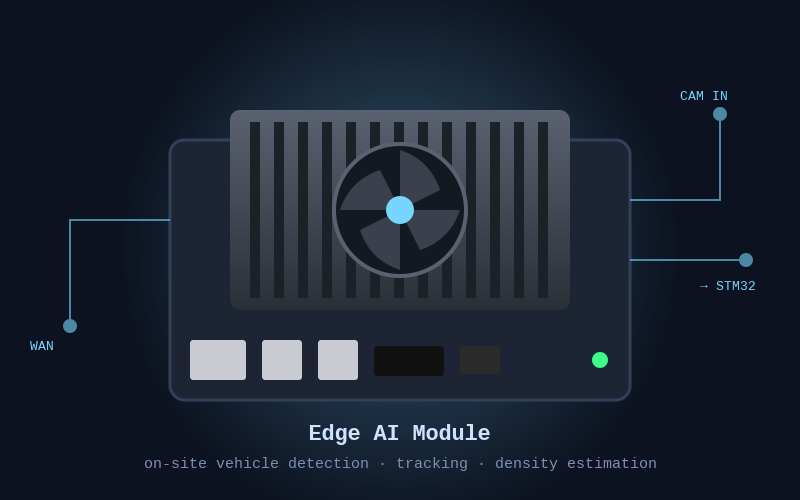
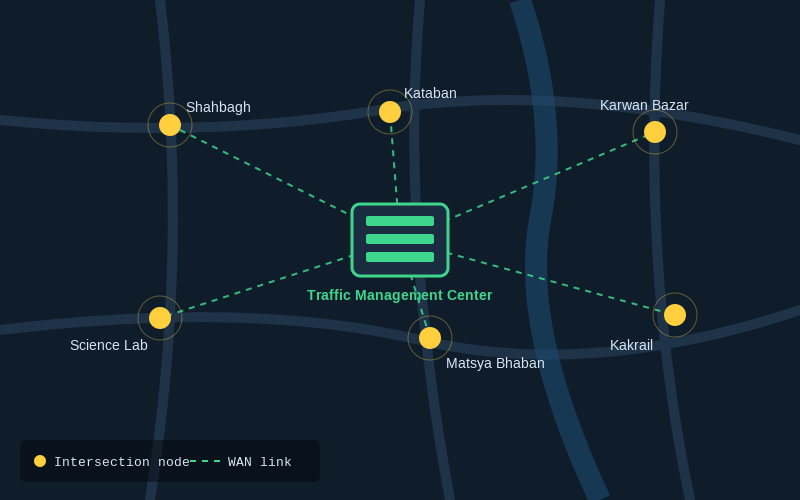
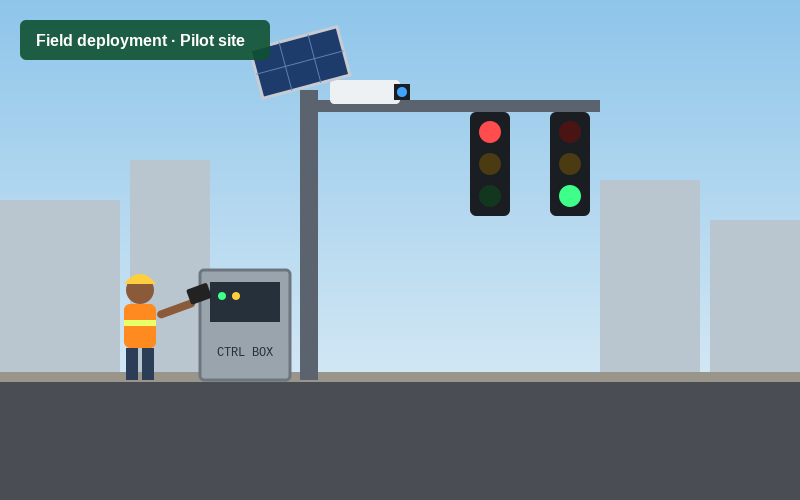
Dhaka's intersections are still largely run on fixed timers or manual control, while the traffic is some of the most mixed and variable in the world: buses, cars, CNG auto-rickshaws, cycle-rickshaws, motorbikes and pedestrians share the same road. This project measures what is actually happening at every approach with cameras and on-site AI, then lets the signal controller give green time where it is needed.
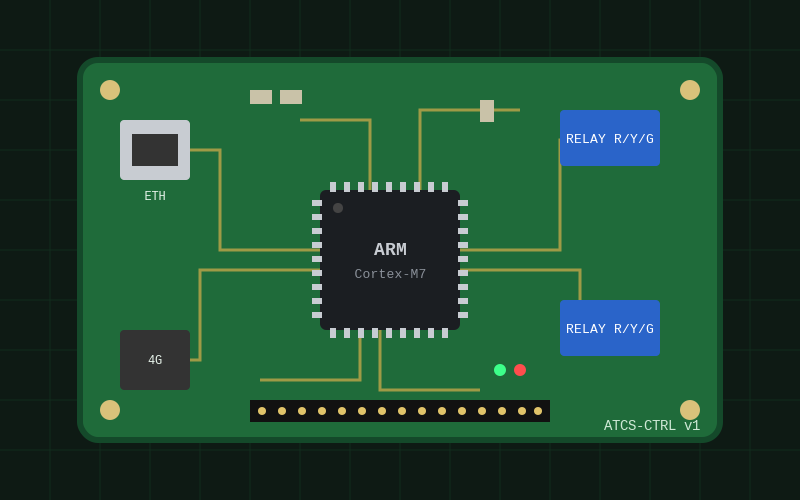
- Key responsibilitiesPCB design, STM32 programming (C), Jetson Orin Nano model training
- Funded by
- Duration
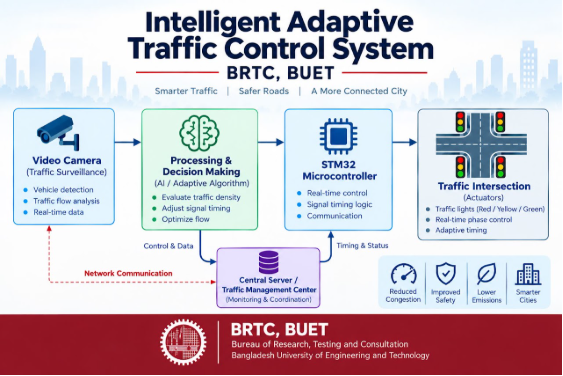
How it works
From camera frame to green light
Interactive
Signal-timing optimization simulator
Two identical intersections receive exactly the same vehicles. Pick a controller for each side and compare queues and delay. Fixed-time is how most signals run today; Webster is the classic optimal fixed plan; Adaptive (AI) uses camera-measured queues, like this project.
Vehicles queued over time
Fixed-time settings
Webster optimization
Amber 3 s · all-red 2 s · saturation flow 1500 veh/h/lane · left-hand traffic · vehicle mix: car, bus, CNG, rickshaw.
Gallery
Project in pictures
Videos
Project in motion
Team
The people behind the signals
A multidisciplinary team across Computer Science, Civil, Electrical and Mechanical Engineering.
Team Leaders
Sub-teams
Resources
Funding, technology & documents
Funding & partners
Technology stack